
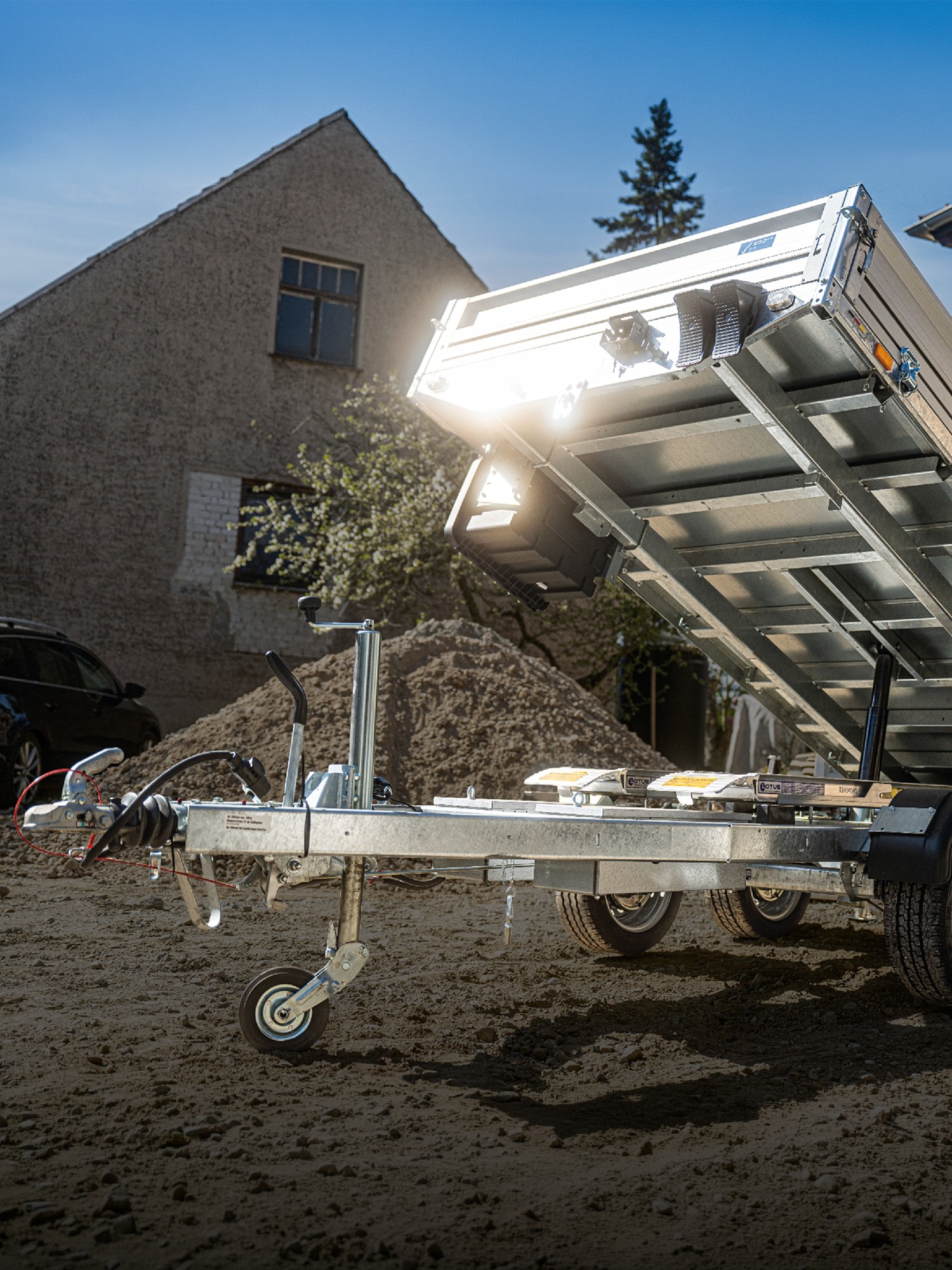
Trailer ABC – C for Camping
Design, Safety, and Smart Options
It is the most important connection between your tow vehicle and your trailer: the drawbar.
But anyone who thinks it’s just a simple metal bar is sorely mistaken. As an essential component of the chassis, it plays a crucial role in your driving safety and, with the right accessories, even offers practical added benefits. In our STEMA Trailer ABC, we take a detailed look at the topic of drawbars.
1. The Structure: More Than Just a Connection
Without the drawbar, the vehicle simply could not be coupled to the towing vehicle.
But it serves many more purposes than that: Not only does it carry the load in the traditional sense, but—more importantly—it must also transfer all the dynamic forces acting on the vehicle while driving to the chassis. In this way, the drawbar plays a key role in ensuring safe and stable handling on the road.
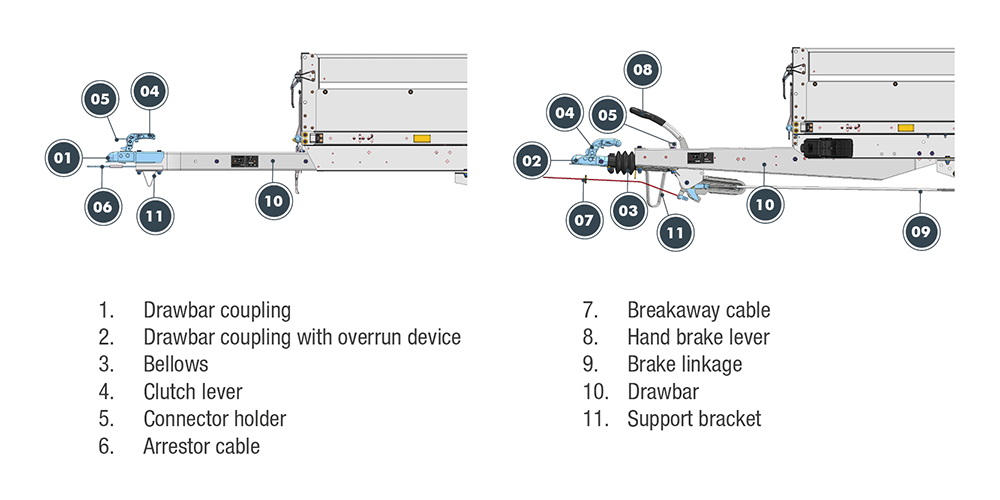
A drawbar always refers to the complete assembly. It includes numerous other key components essential for safe operation
- Tow ball hitch
- Towing device with overrun brake (exclusively for braked trailers)
- Jockey wheel, parking stands, and drawbar box (some available as optional equipment) Support bracket
- Safety cable or breakaway brake cable
- Plug including cable for the electrical connection to the towing vehicle
Important Technical Note:
With STEMA drawbars in the traditional sense, the assembly consists of two drawbar beams that are either rigidly or functionally connected. Since drawbar beams are components subject to approval, unauthorized technical modifications (such as drilling additional holes) must never be made to them. STEMA consistently relies on drawbar beams that it has developed in-house, which are precisely fitted and tested.
2. The Different Types of Drawbars at STEMA
Depending on the trailer model and intended use, STEMA employs a variety of designs:
The V-Drawbar
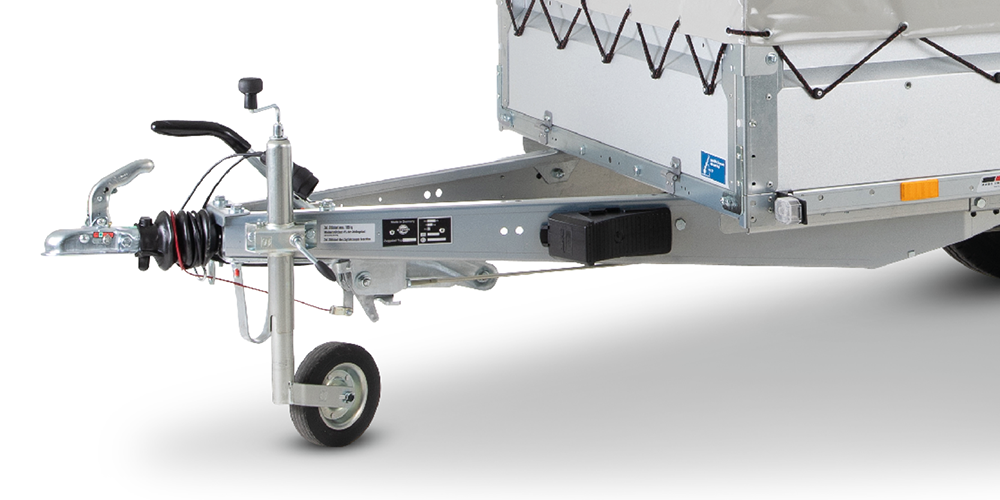
It consists of two drawbar beams that converge from the chassis frame toward the coupling in a “V” shape.
This design distributes the force evenly into the frame, ensuring high torsional rigidity and a smooth, stable straight-line ride. It is the standard design for many passenger car trailer series (such as SySTEMA or OPTI).
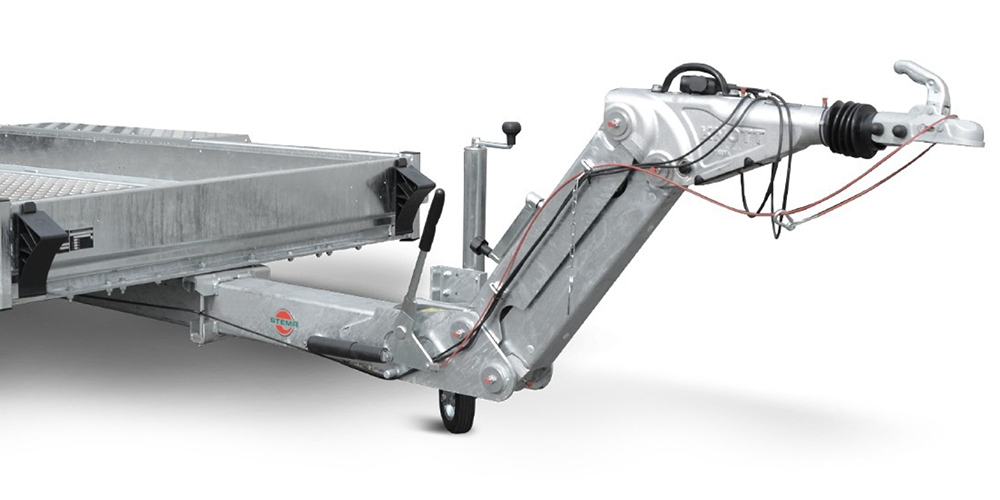
The Tiltable V-Shaped Drawbar
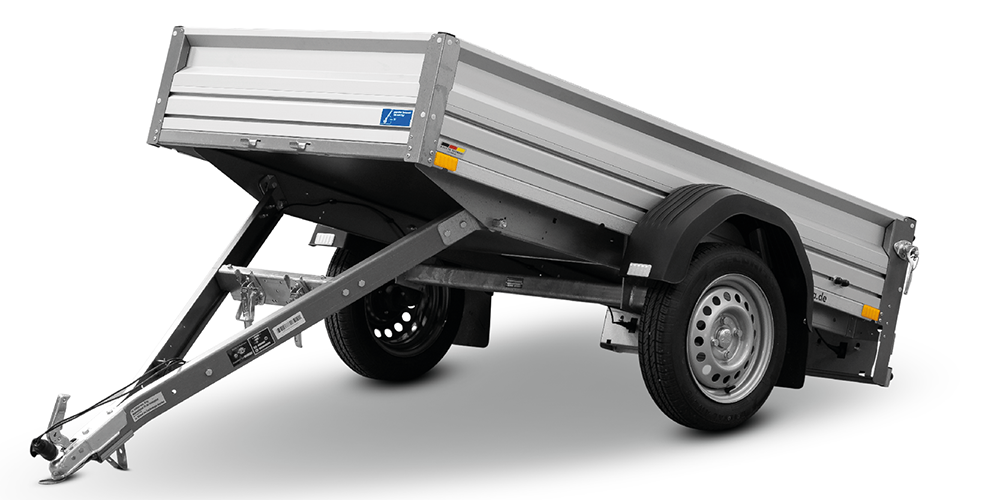
This version is basically the same as a V-drawbar, but on fold-up trailers, it is mounted on a folding mechanism.
Important to know: It is not the drawbar itself that is the movable component here, but rather the entire drawbar assembly as a single unit (the pivot points vary depending on the model). This is extremely practical for storing the trailer upright to save space or for making loading and unloading easier.
This feature can be found, for example, on the STEMA Retro, FT, Basic, and REX models.
The central tube (often called the “gooseneck”)
This is not a traditional V-shape, but rather a single tube that runs from the chassis frame to the coupling and incorporates the entire overrun device.
STEMA uses only the height-adjustable version of this tube in its professional and special-purpose vehicles of the TRIUS and BAUMA models.
3. Safety First: Towing Weight and Visual Inspection
To ensure you’re always safe on the road, you should take a quick look at the following points before every trip:
-
Use the correct tongue weight: The tongue weight refers to the weight pressing down from above on the car’s trailer hitch. It should be utilized as much as possible, but never exceeded. If the tongue weight is too low, the trailer will tend to sway. Too much tongue weight relieves the load on the towing vehicle’s front axle, which negatively affects steering and braking performance (for more details, see “B” for “Loading”).
-
Always attach the safety cable/breakaway cable correctly, check it for damage before every trip, and replace it if necessary.
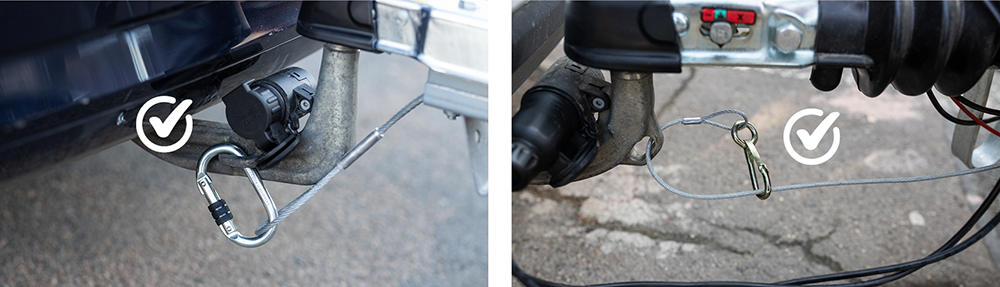
Installation on Unbraked Trailers (Safety Cable/Lanyard)
-
Is intended to ensure that the trailer remains connected to the towing vehicle even if the coupling fails
-
Is intended to prevent the trailer from rolling away uncontrollably
Installation on Braked Trailers (Breakaway Brake Cable)
-
In the event of a coupling failure, the trailer’s parking brake should be applied first
-
After the parking brake is released, the breakaway cable should snap at a predetermined point so that the trailer comes to a controlled stop
-
A red breakaway cable is required for braked trailers. It must be securely fastened to an eyelet or directly to the towing vehicle’s trailer hitch to trigger the trailer’s emergency braking in an emergency.
Wear Indicator
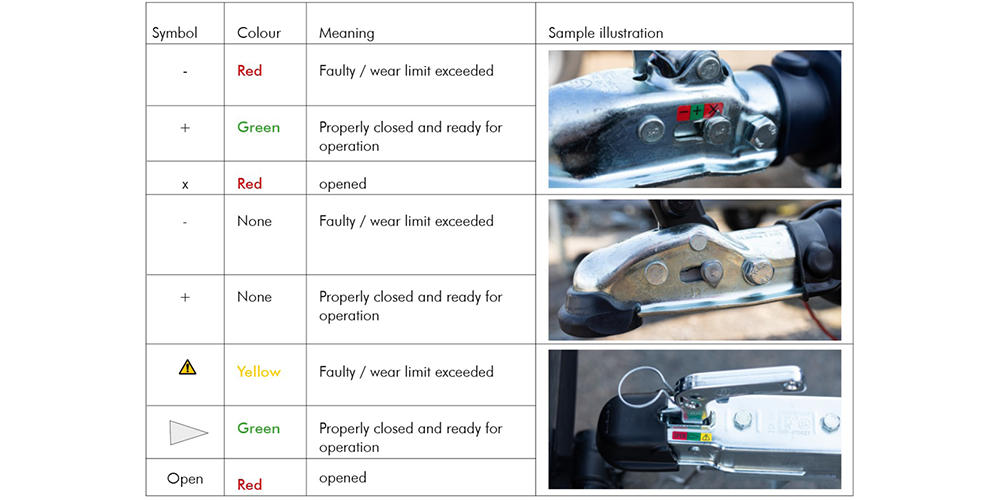
Keep an eye on the wear indicator: Our STEMA tow ball couplings feature a convenient indicator (with a +/- range) that signals whether the ball still has sufficient grip when locked in place or if there is excessive wear.
4. Care and Maintenance: How to Keep Your Drawbar in Good Working Order for a Long Time
STEMA drawbars are optimally protected against corrosion thanks to high-quality galvanization. Nevertheless, a little regular maintenance will noticeably extend their service life:
-
Lubricate the coupling: The interior of the ball hitch should be regularly cleaned of dirt and relubricated with standard roller bearing grease. (Exception: If you have retrofitted your trailer with an anti-sway coupling—e.g., for 100 km/h certification—the coupling must not be greased!)
-
Maintain the overrun brake system: Braked trailers have grease fittings on the overrun brake system. Depending on operating and usage conditions, these should be regularly lubricated with fresh grease using a grease gun.
-
Protect electrical cables: Make sure that the cable connected to the plug does not drag unsecured across the ground while driving or when the trailer is unhitched, and that it is not pinched in the moving joints.
Conclusion
The drawbar is the functional heart of your trailer: It ensures absolute driving stability, incorporates safety features, and—with the right accessories—offers smart storage solutions. If you understand its unique characteristics, maintain it regularly, and pay attention to the tongue weight, you’ll always reach your destination safely and stress-free with your STEMA trailer!
Newsletter & Contact

Subscribe to the STEMA newsletter.
Subscribe to the STEMA newsletter and get news and special offers emailed directly to you.
- Linda Pilot
- Marketing & PR
- Riesaer Straße 50
- 01558 Großenhain
- T +49 3522 30 94 94